


Mold Surface Finish Guide: SPI, VDI and Mold-Tech Texture Standards
Estimated reading time: 14 minutes
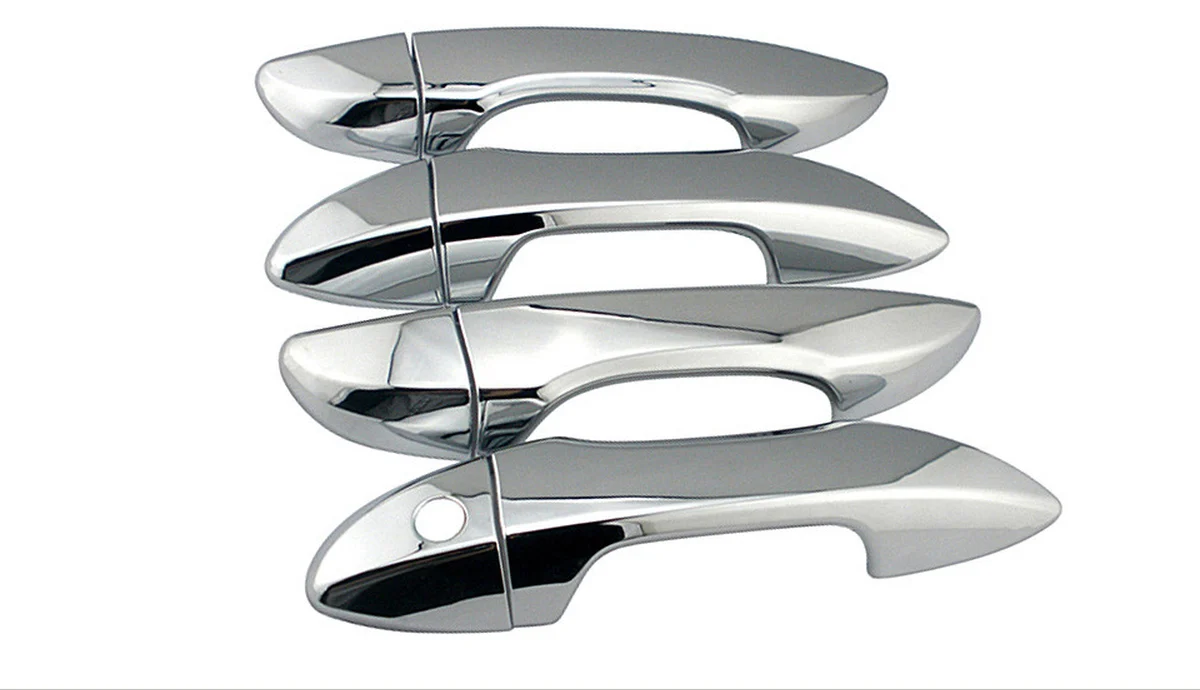
Specifying the right mold surface finish is one of the fastest ways to control part cosmetics, tactile grip, optical clarity, ejection reliability, and total tooling cost in plastic injection molding. Because molten polymer replicates the microscopic topography of the steel mold cavity wall under high packing pressure, every polishing scratch, EDM spark crater, or chemical etch pit transfers directly onto every production part. Three global frameworks govern how engineers specify cavity finishes: SPI (Society of the Plastics Industry), VDI 3400, and Mold-Tech (MT) texture standards.
At DJmolding, our tooling engineers review hundreds of 2D part drawings and 3D CAD models every year where mismatched surface callouts—such as requesting an SPI A-1 mirror finish on P20 steel or calling out a deep MT leather grain on a 1-degree vertical wall—cause costly mold rework, drag marks, and launch delays. In this comprehensive guide, we compare SPI, VDI 3400, and Mold-Tech standards side by side with exact Ra roughness conversions, draft angle calculations by resin, mold steel compatibility (S136, NAK80, P20, H13), resin gloss interaction, T1 pre-texture trial strategy, and tooling cost impacts.
SPI, VDI 3400, and Mold-Tech Compared: Which Standard Should You Specify?
Each of the three mold surface finish standards was developed for a distinct manufacturing process and visual outcome. Choosing the correct framework early in Design for Manufacturability (DFM) prevents translation errors between product designers, mold makers, and texture houses.
| Standard | Primary Process | Typical Surface Look | Roughness Range (Ra) | Best Applications |
|---|---|---|---|---|
| SPI (A1 to D3) | Diamond buffing, grit paper, stoning, glass-bead/oxide blasting | Optical mirror gloss, semi-gloss, directional matte, light satin blast | 0.012 to 3.20 um | Lenses, light pipes, transparent covers, medical housings, internal ribs |
| VDI 3400 (0 to 45) | Sinker EDM (electrical discharge machining) or chemical simulation | Uniform, non-directional fine to coarse matte spark texture | 0.10 to 18.0 um | Industrial enclosures, consumer electronics, automotive hidden/semi-cosmetic parts |
| Mold-Tech (MT) | Photochemical acid etching or 5-axis laser texturing | Repeatable decorative patterns (fine matte, leather, geometric, wood, stipple) | 10 to 250+ um depth | Automotive interiors, handheld grips, appliance bezels, brand-signature housings |
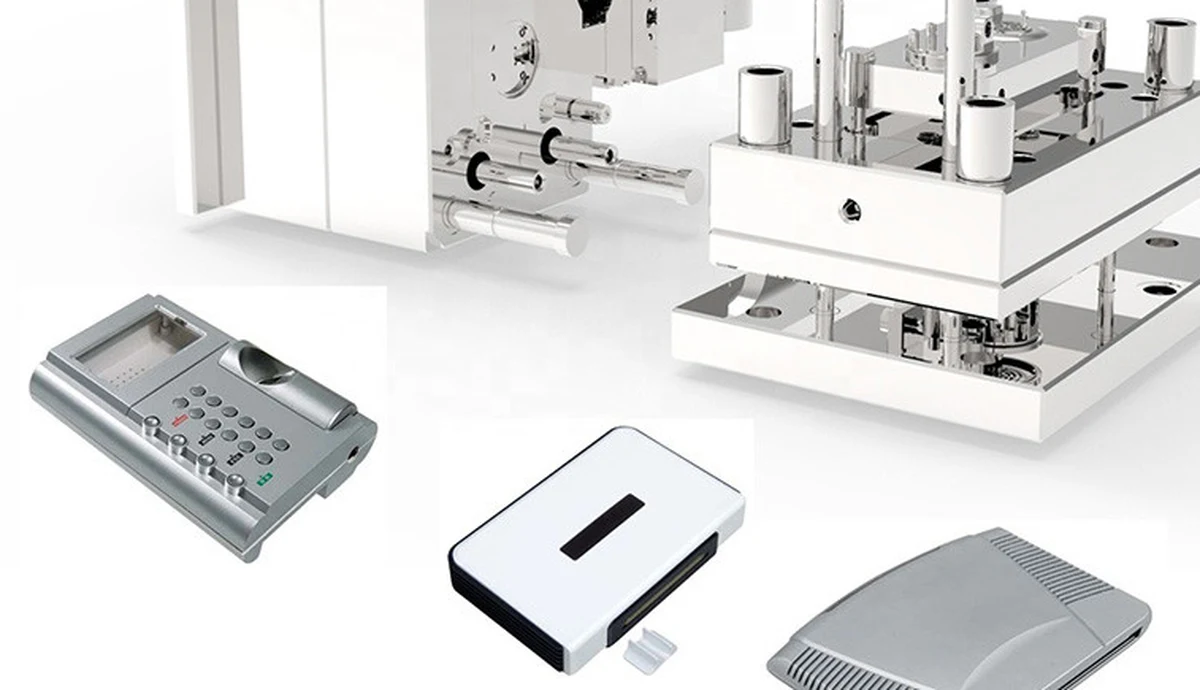
In practice, most multi-surface commercial parts combine two standards on the same mold: for example, an SPI B-2 paper polish on hidden internal mating ribs and snap fits to reduce ejection friction, paired with VDI 24 or Mold-Tech MT-11020 on external Class-A cosmetic walls to hide flow lines, fingerprints, and minor sink marks.
SPI Surface Finish Standards (A1 to D3): Polish, Paper, Stone, and Blast
The SPI standard divides mold cavity finishes into 12 discrete grades across four lettered families—A, B, C, and D—defined by the abrasive medium used by the mold polisher. Because Grade A and Grade B finishes are produced manually by skilled polishers using progressively finer stones, abrasive papers, and diamond compounds, specifying a higher SPI grade than a part actually requires is one of the fastest ways to inflate tooling cost without functional benefit.
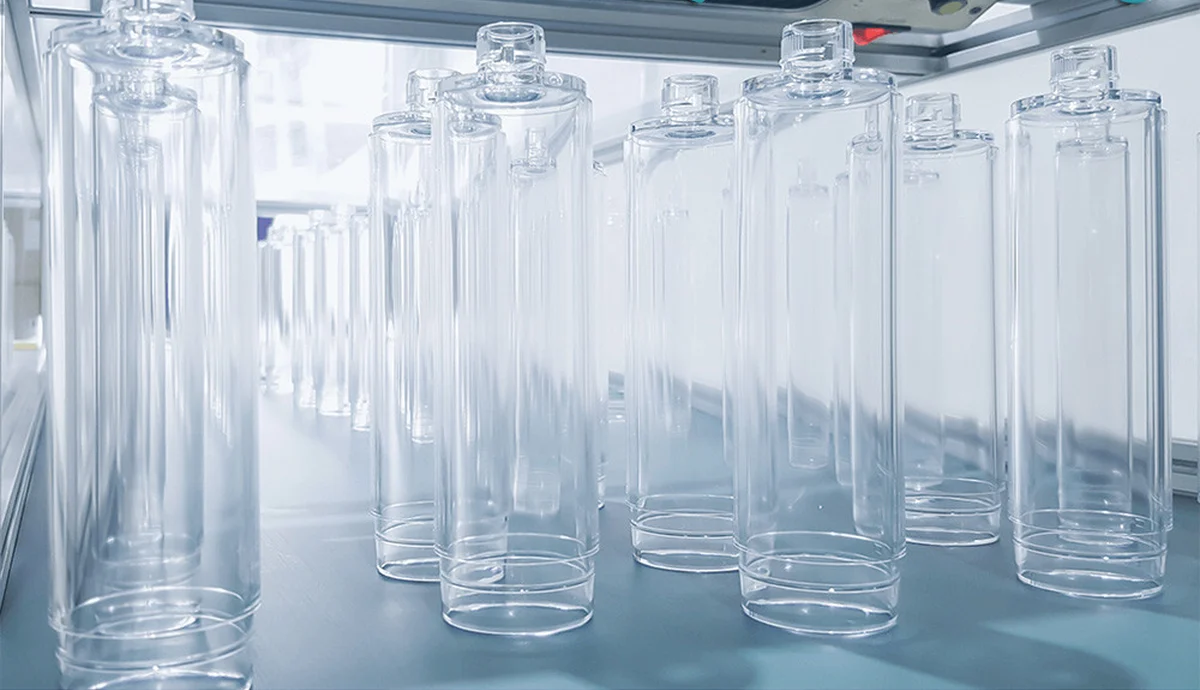
- SPI Grade A (Mirror / Optical Polish — Diamond Buffed): A-1 (#3 diamond buff, 0.012–0.025 um Ra), A-2 (#6 diamond buff, 0.025–0.050 um Ra), and A-3 (#15 diamond buff, 0.050–0.100 um Ra). Grade A is reserved for transparent lenses, optical light guides, cosmetic high-gloss piano-black bezels, and medical diagnostic cuvettes where even sub-micron haze is unacceptable.
- SPI Grade B (Semi-Gloss — Abrasive Paper Polish): B-1 (600-grit paper, 0.050–0.100 um Ra), B-2 (400-grit paper, 0.100–0.150 um Ra), and B-3 (320-grit paper, 0.280–0.320 um Ra). Grade B removes CNC cutter scallops and EDM recast layers cleanly, making it our default recommendation for smooth consumer parts, internal functional surfaces, and pre-texture base preparation.
- SPI Grade C (Matte — Fine Stone Finish): C-1 (600-grit stone, 0.350–0.400 um Ra), C-2 (400-grit stone, 0.450–0.550 um Ra), and C-3 (320-grit stone, 0.630–0.700 um Ra). Grade C eliminates machining marks quickly at low labor cost and is ideal for non-cosmetic structural brackets, internal enclosures, and industrial parts.
- SPI Grade D (Satin / Textured — Dry Media Blasting): D-1 (#11 glass bead blast, 0.80–1.00 um Ra), D-2 (#240 aluminum oxide blast, 1.00–1.60 um Ra), and D-3 (#24 aluminum oxide blast, 3.20–18.0 um Ra). Dry blasting creates an economical, non-directional matte surface that disguises knit lines and slight sink marks on cost-sensitive enclosures.
VDI 3400 Surface Finish Standards: EDM Matte Textures Explained
Developed by the Association of German Engineers (Verein Deutscher Ingenieure), VDI 3400 is the global engineering language for uniform, non-directional matte surfaces produced by sinker EDM (Electrical Discharge Machining)—or replicated via chemical etching when EDM electrodes are impractical on large flat faces. The VDI scale runs from VDI 0 (mirror-like, 0.10 um Ra) up to VDI 45 (very coarse, 18.0 um Ra), with every increment of 3 VDI numbers roughly doubling the surface roughness Ra.
In day-to-day injection molding production, four VDI bands cover more than 90% of commercial enclosures and industrial housings:
- VDI 12 to VDI 18 (0.40 to 0.80 um Ra — Fine Matte): Delivers a silky, low-glare satin sheen popular on medical instruments, smart-home controllers, and handheld electronics. Requires minimal extra draft (0.5 to 1.0 degree) but shows finger oils more readily than medium matte.
- VDI 21 to VDI 27 (1.12 to 2.24 um Ra — Standard Medium Matte): The workhorse finish for B2B electronics enclosures, power-tool shells, and automotive trim. Effectively masks weld lines, gate vestige, and glass-fiber swirl while maintaining crisp part lettering.
- VDI 30 to VDI 33 (3.15 to 4.50 um Ra — Heavy Matte): Provides tactile grip and strong scratch resistance for ruggedized industrial housings and outdoor equipment, requiring 2.0 to 3.0 degrees of draft per side.
- VDI 36 to VDI 45 (6.30 to 18.0 um Ra — Coarse Pebble): Reserved for heavy grip surfaces and thick-walled industrial covers; demands 3.5 to 6.0+ degrees of draft to eject cleanly without drag marks.
SPI vs. VDI 3400 Roughness Cross-Reference Chart
When North American engineering teams send SPI callouts to European or Asian mold makers—or vice versa—using a verified Ra conversion table eliminates subjective visual disputes during T1 sample inspection:
| SPI Grade | Finishing Method | Roughness Ra (um) | Roughness Ra (uin) | Closest VDI 3400 Equivalent |
|---|---|---|---|---|
| SPI A-1 | #3 Diamond Buff | 0.012 – 0.025 | 0.5 – 1.0 | Finer than VDI 0 |
| SPI A-2 | #6 Diamond Buff | 0.025 – 0.050 | 1.0 – 2.0 | VDI 0 – 3 |
| SPI A-3 | #15 Diamond Buff | 0.050 – 0.100 | 2.0 – 4.0 | VDI 4 – 5 |
| SPI B-1 | 600-Grit Paper | 0.050 – 0.100 | 2.0 – 4.0 | VDI 6 |
| SPI B-2 | 400-Grit Paper | 0.100 – 0.150 | 4.0 – 6.0 | VDI 7 – 8 |
| SPI B-3 | 320-Grit Paper | 0.280 – 0.320 | 11.0 – 13.0 | VDI 9 – 10 |
| SPI C-1 | 600-Grit Stone | 0.350 – 0.400 | 14.0 – 16.0 | VDI 11 – 12 |
| SPI C-2 | 400-Grit Stone | 0.450 – 0.550 | 18.0 – 22.0 | VDI 13 – 15 |
| SPI C-3 | 320-Grit Stone | 0.630 – 0.700 | 25.0 – 28.0 | VDI 16 – 17 |
| SPI D-1 | #11 Glass Bead Blast | 0.800 – 1.000 | 32.0 – 40.0 | VDI 18 – 19 |
| SPI D-2 | #240 Oxide Blast | 1.000 – 1.600 | 40.0 – 63.0 | VDI 20 – 24 |
| SPI D-3 | #24 Oxide Blast | 3.200 – 6.300+ | 125 – 250+ | VDI 30 – 36 |
Mold-Tech (MT) Texture Standards: Chemical Etching vs. 5-Axis Laser Texturing
When a product requires a controlled, repeatable aesthetic grain—such as fine stipple, automotive leather, woven fabric, brushed metal, or micro-geometric grip—Mold-Tech (MT) patterns are the global industry benchmark. Unlike EDM VDI textures that only produce random spark matte, Mold-Tech catalogs thousands of numbered patterns (most commonly the MT-11000 fine matte series such as MT-11000, MT-11010, MT-11020, and MT-11030, plus deeper leather and geometric series) that can be replicated identically across multiple global factories and multi-cavity tools.
Mold-Tech textures are applied to hardened or pre-hardened steel cavities using one of two processes:
- Photochemical Acid Etching: A skilled technician cleans the steel cavity, masks off parting lines, shutoffs, and glossy zones with acid-resistant wax or tape, applies a photo-resist pattern film, and immerses or sprays the cavity with ferric chloride acid to etch controlled depth (typically 0.010 mm on MT-11000 up to 0.150+ mm on deep leather grains). Chemical etching is highly cost-effective for standard stipple and matte patterns on simple to moderately contoured housings.
- 5-Axis Laser Texturing: A digital 3D texture map is ablated directly onto the steel cavity layer by layer using a precision fiber laser. Laser texturing eliminates acid-masking seam lines across complex curved surfaces, achieves razor-sharp multi-depth transitions, and guarantees exact cavity-to-cavity repeatability on high-volume automotive and consumer-electronics molds—at roughly 2x to 3x the cost of chemical etching.
Draft Angle Rules for Textured Surfaces: Preventing Drag Marks and Sticking
Every micron of cavity roughness creates microscopic undercuts along vertical side walls. As molten plastic cools and shrinks onto the core—or presses outward against the cavity during packing—those tiny steel peaks grip the part wall like Velcro. If the part lacks sufficient draft angle, the ejector pins force the plastic across the texture peaks, causing smeared drag marks (shiny vertical streaks), stress whitening, or complete part sticking.
At DJmolding, we apply the universal tooling engineering rule during every DFM review: start with a baseline structural draft of 0.5 to 1.0 degree per side for smooth walls, then add 1.0 to 1.5 degrees of extra draft for every 0.025 mm (0.001 inch) of texture depth. Rigid, low-shrinkage amorphous resins (like PC and PC/ABS) and abrasive glass-filled resins (like PA66 GF30) require the upper end of that range, while waxy, high-shrinkage polyolefins (PP, HDPE) release slightly more forgivingly.
| Texture / Finish Callout | Approx. Depth / Ra | Min. Draft (PP / PE) | Min. Draft (ABS / PA) | Min. Draft (PC / GF Resins) |
|---|---|---|---|---|
| SPI A1 – B3 (Smooth) | 0.01 – 0.32 um Ra | 0.5 deg | 0.5 – 1.0 deg | 1.0 deg |
| MT-11000 / VDI 18 | ~0.010 mm depth / 0.8 um Ra | 1.0 deg | 1.0 – 1.5 deg | 1.5 – 2.0 deg |
| MT-11010 / VDI 24 | ~0.025 mm depth / 1.6 um Ra | 1.5 deg | 2.0 deg | 2.5 – 3.0 deg |
| MT-11020 / VDI 27 | ~0.040 mm depth / 2.2 um Ra | 2.0 deg | 2.5 – 3.0 deg | 3.0 – 4.0 deg |
| MT-11030 / VDI 33 | ~0.065 mm depth / 4.5 um Ra | 3.0 deg | 3.5 – 4.0 deg | 4.5 – 5.0 deg |
| Deep Leather / VDI 39+ | 0.100+ mm depth / 9+ um Ra | 4.0 deg+ | 5.0 deg+ | 6.0 deg+ (or side actions) |
When tight industrial-design constraints prevent adding 3 to 4 degrees of draft on a textured vertical bezel, our engineers either reduce texture depth (stepping from MT-11020 down to MT-11005), add a mechanical side-action slider to pull the textured wall clear before ejection, or use a dual-stage ejector system. For complete wall-thickness, rib, and draft fundamentals, review our injection molding DFM design rules guide.
Mold Steel Selection vs. Surface Finish: S136, NAK80, P20, and H13
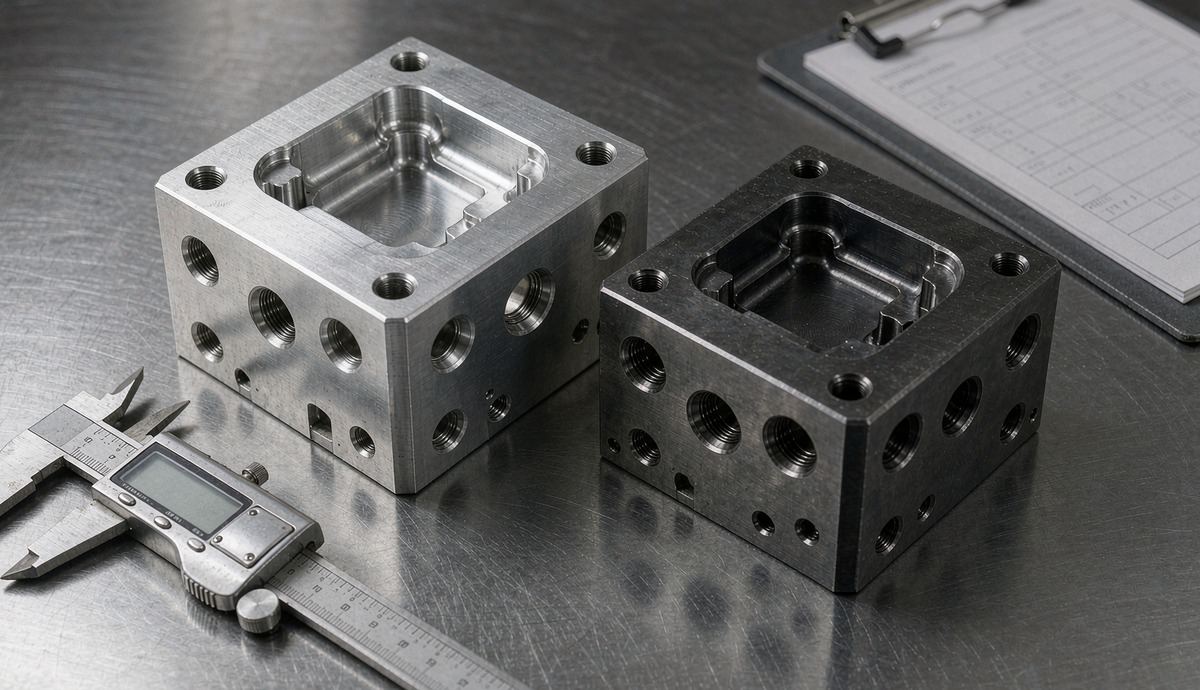
A mold cavity can only hold a surface finish as cleanly as the metallurgy of the tool steel allows. Non-metallic sulfur inclusions, carbide banding, and uneven hardness cause “orange peel” ripples during diamond buffing and blotchy “zebra striping” during chemical acid etching.
- S136 (ESR Stainless, Hardened 48–52 HRC): The premier steel for SPI A-1 and A-2 optical mirror finishes and medical/corrosive-resin tooling. Electro-slag remelting (ESR) eliminates micro-inclusions so polishers achieve true distortion-free optical clarity, while high chromium content prevents rust from ruining mirror surfaces between production runs.
- NAK80 (Pre-Hardened 37–43 HRC): Engineered specifically for fine chemical texturing (MT-11000/11010) and high-gloss SPI A-2/A-3 cosmetic housings. Its precipitation-hardened microstructure etches with exceptional uniformity from surface to core without requiring post-machining heat treatment or weld-line discoloration risk.
- P20 / 718H (Pre-Hardened 28–36 HRC): The cost-effective standard for SPI B-2 to D-3 and medium-to-coarse VDI/Mold-Tech textures on medium-volume enclosures and large housings. P20 should not be specified for true SPI A-1 optical mirrors because lower hardness wears rapidly and reveals microscopic pitting under fine diamond paste.
- H13 (Hardened 46–52 HRC): The preferred choice for abrasive glass-filled engineering resins (PA66 GF30, PBT GF) and high-temperature polymers running over 500,000+ shots. Textured cavities in H13 resist rapid glass-fiber polishing wear that would otherwise turn a matte VDI 24 wall glossy after 50,000 cycles.
Compare full wear life, corrosion resistance, and machining cost across these four steels in our P20 vs. H13 vs. S136 vs. NAK80 mold steel selection guide.
How Plastic Resin Chemistry Changes Final Gloss and Texture Appearance
Two parts molded in the exact same textured steel cavity using two different resins will rarely look identical. Polymer crystallinity, shrinkage rate, melt viscosity, and mineral or glass-fiber fillers strongly alter how faithfully the plastic copies the steel topography:
- Amorphous Resins (ABS, PC, PMMA, GPPS): Low shrinkage (0.4% to 0.7%) and smooth melt flow reproduce fine SPI A-1 mirrors and sharp MT-11000 micro-textures with high fidelity. Explore cosmetic enclosure tuning in our ABS injection molding parameters and enclosure design guide.
- Semi-Crystalline Resins (PP, PE, POM, PA6/PA66): Higher shrinkage (1.2% to 2.5%) pulls the cooling skin slightly away from microscopic cavity valleys unless mold temperature and packing pressure are tightly controlled, generally producing a slightly lower gloss than ABS on identical SPI B/C surfaces.
- Glass-Filled Resins (PA66 GF30, PC GF20, PBT GF30): Exposed glass fibers create silvery surface streaks (“fiber bloom”) on smooth SPI A/B cavities. Applying a medium-to-coarse texture (VDI 27 to VDI 30 or MT-11020/11030) combined with higher mold temperature (80–100 C) masks fiber bloom effectively—a technique we detail in our PA66 GF30 molding strength and design guide.
Best-Practice Production Workflow: Always Run T1 Smooth Before Texturing
One of the most expensive mistakes buyers make is demanding full chemical texturing before the first mold trial (T1). Once a cavity is acid-etched with a Mold-Tech pattern, any dimensional adjustment—such as adding steel by laser welding to thicken a snap fit or deepening a rib—leaves a permanent weld halo that etches differently from the surrounding base steel and ruins cosmetic uniformity.
At DJmolding, our standard engineering workflow protects your tooling investment in three disciplined stages:
- Stage 1 — Pre-Texture Finish (SPI B-2 / B-3): Machine and paper-polish the cavity to a uniform smooth finish and run T1 dimensional and functional samples.
- Stage 2 — Dimensional Freeze & Fit Approval: Complete full CMM dimensional inspection, assembly fit checks, and any steel-safe adjustments while the cavity is still untextured.
- Stage 3 — Final Texturing & Gloss Verification (T2): Ship the frozen cavity inserts to the certified texture house (or laser-texturing cell), verify gloss level (60-degree gloss meter GU reading) and plaque match at T2, and lock in PPAP / production master samples.
This phased approach adds zero risk to your schedule while preventing $3,000 to $15,000 cavity-insert remakes caused by late-stage engineering changes. For more tooling cost-control strategies, see our breakdown of 8 factors that drive injection mold cost and our 12 questions to ask before ordering an injection mold.
How to Call Out Surface Finishes Cleanly on 2D Drawings and 3D STEP Files
Ambiguous drawing notes such as “smooth matte finish” or “glossy outside” guarantee inspection disputes between engineering and purchasing. A clear, unambiguous mold surface finish specification includes five elements:
- Exact standard code: Specify
SPI A-2,VDI 24, orMold-Tech MT-11010—never vague adjectives. - Color-coded 3D face map: Color-code your 3D CAD model (for example, blue = MT-11010, yellow = SPI A-2, gray = SPI B-3) so the mold maker knows exact shutoff and masking boundaries between glossy and matte zones.
- Target gloss reading (if critical): Specify 60-degree gloss units (e.g.,
3.5 +/- 1.0 GU) alongside the texture code, since resin grade and mold temperature shift gloss independently of texture depth. - Gate, ejector, and parting-line zones: Indicate cosmetic Class-A surfaces where ejector pins, gate vestiges, and witness lines are prohibited.
- Physical plaque approval: Approve a molded resin plaque in your exact production material and color—never judge final plastic appearance solely from a metal VDI swatch or an uncolored ABS texture plaque.
Frequently Asked Questions About Mold Surface Finish Standards
What is the difference between SPI, VDI 3400, and Mold-Tech surface finishes?
SPI (A1–D3) specifies mechanical polishing, paper lapping, stoning, and media blasting—making it the standard for glossy mirrors and smooth functional walls. VDI 3400 (0–45) specifies uniform matte spark textures created by sinker EDM. Mold-Tech (MT) specifies repeatable decorative patterns—including fine matte stipples, leather grains, and geometric textures—applied via photochemical etching or 5-axis laser texturing.
How much does surface finish affect injection mold cost and lead time?
Standard SPI C-1/B-3 or light EDM VDI 24 finishes are typically included in base tooling quotes with no extra lead time. True SPI A-1 optical diamond polishing adds 10% to 25% to cavity labor cost and 3 to 7 extra days due to meticulous hand-buffing and S136 ESR steel requirements. Chemical Mold-Tech etching adds roughly $400 to $2,500+ per cavity insert (depending on surface area and masking complexity) plus 5 to 7 days after T1 dimensional approval, while 5-axis laser texturing adds higher cost for seamless 3D contours.
Can you apply a Mold-Tech texture on an aluminum prototype mold?
Aluminum alloys (such as 7075 or QC-10) can accept light bead blasting (SPI D-1/D-2) and certain shallow chemical etches, but aluminum does not etch as crisply as NAK80 or P20 steel and wears quickly under production cycles. For true Mold-Tech appearance validation or volume production, hardened or pre-hardened tool steel is strongly recommended.
Why do textured injection-molded parts sometimes develop shiny streaks on side walls?
Shiny vertical streaks—known as drag marks or scuffing—occur when a textured vertical wall lacks sufficient draft angle for the texture depth and resin shrinkage. As the ejector pins push the part out of the cavity, the sharp peaks of the steel texture scrape the plastic skin flat. Increasing draft angle by 1.0 to 1.5 degrees per 0.025 mm of texture depth, or adding a light polish-release pass to the texture peaks, eliminates drag marks.
Which surface finish hides sink marks, weld lines, and glass fibers best?
Medium-to-coarse matte textures—specifically VDI 24 to VDI 30 or Mold-Tech MT-11010 to MT-11030—scatter ambient light diffusely and conceal minor sink marks, flow lines, knit lines, and glass-fiber bloom far more effectively than glossy SPI A or semi-gloss SPI B surfaces, which amplify even 0.01 mm surface depressions.
Engineer Precision Mold Surface Finishes with DJmolding
Achieving consistent Class-A cosmetics across tens or hundreds of thousands of molded parts requires aligning part draft geometry, tool steel metallurgy, resin chemistry, and T1-to-T2 texturing discipline under one roof. Guessing on texture codes or skipping pre-texture validation leads to drag marks, gloss mismatches, and costly cavity rework.
At DJmolding, our in-house tooling and production facility supports every finish tier—from SPI A-1 optical mirror polishing on S136 ESR steel to precision sinker-EDM VDI 3400 matte cavities and certified Mold-Tech chemical/laser textures—backed by IATF 16949 automotive quality systems, cleanroom medical molding standards, and full engineering resin expertise.
Ready to validate draft angles, steel grade, and surface finish specs on your next injection-molded product? Visit DJmolding today to upload your 3D CAD files for a complimentary DFM surface-finish review, texture plaque recommendation, and direct factory B2B tooling quote.
