


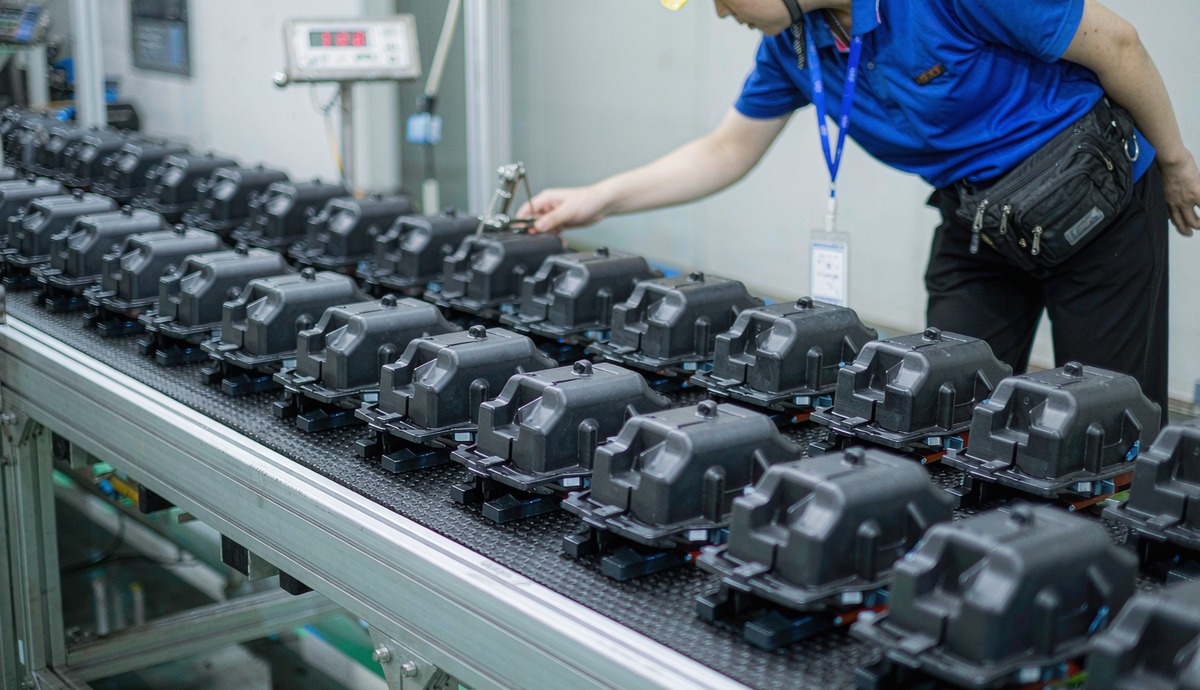
Single-Source vs Dual-Source Molding Suppliers: Managing Supply Risk
Key Takeaways: Choosing between single-source and dual-source injection molding suppliers requires weighing duplicate hard-tooling capital expenditure and double PPAP validation against the financial cost of an assembly-line shutdown. Single-sourcing maximizes volume leverage, ECN version control, and tooling ROI when protected by ironclad bailment ownership contracts, press-fleet redundancy, and 30-to-60-day safety stock; dual-sourcing provides true geographic and operational continuity for Class-A line-stopper components only when backed by duplicate steel molds and a meaningful 70/30 or 80/20 volume split. At DJmolding, we support both consolidated single-source OEM programs and standardized duplicate-tooling architectures engineered for seamless cross-plant transferability.
Reading time: 9 minutes
Why Is Managing Supply Risk Different in Custom Injection Molding Than in Other Manufacturing?
In standard electronic components, machined aluminum brackets, or sheet-metal enclosures, qualifying a secondary supplier is largely a matter of sending Gerber files or STEP drawings to a second shop with comparable CNC or SMT machinery. Custom plastic injection molding operates under a fundamentally different physical constraint: production is anchored to custom hard steel tooling that costs anywhere from $15,000 for a simple single-cavity mold to $150,000+ for a multi-cavity hot-runner production tool, takes 6 to 14 weeks to fabricate, and must be tuned to a specific press’s clamping tonnage, screw geometry, and thermal response.
Because of this hard-tooling lock-in, blanket procurement mandates like “dual-source every plastic part” frequently backfire—draining capital budgets, splitting volume below economic price tiers, and creating subtle dimensional mismatches between two suppliers’ parts on the assembly line. Conversely, blindly single-sourcing a revenue-critical housing without tool-ownership protections, resin backup grades, or buffer inventory leaves an OEM exposed to catastrophic downtime if a factory fire, equipment failure, or tariff shock hits. Managing molding supply risk effectively starts with understanding the exact mechanics, costs, and failure modes of both single-sourcing and dual-sourcing.
Single-Source Injection Molding: Advantages, Hidden Risks, and When It Wins
Under a single-source molding strategy, 100% of a component’s annual volume is consolidated with one qualified molder running one primary production mold (or a family of molds housed within that same supplier’s multi-press facility). For complex, high-CapEx, or low-to-medium volume molded parts, single-sourcing remains the dominant industrial strategy for four concrete reasons:
- Zero Duplicate Tooling CapEx: Consolidating production avoids spending an extra $40,000 to $150,000+ to build a second production mold and avoids doubling preventive-maintenance expenses over the product lifecycle.
- Maximum Piece-Price Leverage: Running 100% of annual demand through one supplier unlocks higher volume tiers, faster mold-changeover amortization, and stronger priority during tight global engineering-resin markets.
- Single-Point Quality & ECN Accountability: When a part exhibits warpage, sink marks, or tight assembly interference, one engineering team owns the entire tool-to-press root cause. Engineering Change Notices (ECNs) require modifying only one mold and validating one process window.
- Faster Time to Market: Qualifying a single mold through First Article Inspection (FAI) or Level 3 PPAP cuts launch engineering hours and regulatory review cycles in half compared to parallel dual-tool launches.
The structural vulnerability of single-sourcing is concentrated disruption risk: a localized disaster, supplier insolvency, sudden geopolitical tariff shift, or extended press breakdown can halt deliveries overnight if no mitigation layer exists. For an in-depth look at vetting a primary partner’s resilience, review our guide on ensuring supply chain continuity with a certified OEM plastic parts supplier.
Dual-Source Injection Molding: True Continuity vs. Operational Realities
Under a dual-source molding strategy, annual demand for the exact same component is split across two independent molding suppliers—often across different geographic regions (such as an Asia-plus-Nearshore or Asia-plus-Domestic split). When executed properly on high-volume, mission-critical components, dual-sourcing provides three strategic benefits: uninterrupted business continuity during regional disruptions, surge capacity when product demand unexpectedly spikes above one plant’s press availability, and healthy ongoing commercial tension on piece pricing and lead times.
However, three operational traps derail poorly planned dual-source molding programs:
- The “Single Tool / Shared Vendor” Fallacy: Some procurement teams try to avoid duplicate tooling CapEx by buying one mold and assuming they can simply crate and ship it to Supplier B during a crisis. In reality, molds are engineered around specific tie-bar clearances, knockout bar patterns, water-manifold couplings, and hot-runner electrical pinouts. Emergency tool transfer typically triggers 4 to 8 weeks of rigging, adapter machining, process re-qualification, and fresh PPAP sign-off—far too slow to stop an assembly-line shutdown.
- The 95/5 “Token Allocation” Trap: Giving 95% of volume to Supplier A and only 5% to Supplier B destroys the purpose of dual-sourcing. Supplier B never keeps dedicated press time or safety resin allocated for a tiny account, and their technicians lose hands-on familiarity with the mold. Industry best practice for a functioning dual-source program is a 70/30 or 80/20 volume split so both plants run the part regularly and maintain active resin stock.
- Cross-Plant Dimensional & Cosmetic Drift: Even when Tool A and Tool B are cut from identical 3D CAD models, minor differences in steel thermal conductivity, press check-ring response, and ambient humidity cause measurable Cpk shifts and subtle color/gloss variation. Without harmonized tool specifications and synchronized ECN control, parts from Supplier A and Supplier B may not mate interchangeably on automated assembly lines.
Head-to-Head Comparison: Single-Source vs. Dual-Source Molding
Evaluating both strategies across capital cost, validation workload, quality consistency, and disruption resilience clarifies where each model delivers superior total risk-adjusted ROI.
| Strategic Dimension | Single-Source Molding | Dual-Source Molding (70/30 or 80/20) |
|---|---|---|
| Upfront Tooling CapEx | 1.0x Baseline (Single production mold) | 2.0x Baseline (Duplicate steel production molds) |
| Unit Piece Price | Lowest (100% volume concentration) | 5% – 15% higher (fragmented volume & setups) |
| PPAP / Validation Burden | Single FAI / Level 3 PPAP package | Double PPAP / IQ-OQ-PQ & ongoing Cpk tracking |
| ECN & Revision Control | Simple (one steel revision trail) | Complex (must synchronize two toolmakers) |
| Macro / Geopolitical Risk | Higher (mitigated via safety stock & bailment) | Low (geographic & capacity redundancy) |
| Ideal Part Classification | Complex, high-CapEx, low/mid-volume, or non-critical | High-volume Class-A line-stopper & safety-critical parts |
The Break-Even Risk Math: When Does Duplicate Tooling Pay for Itself?
Most supply-chain articles discuss single- vs. dual-sourcing qualitatively without giving finance and engineering leaders a quantitative decision formula. At DJmolding, we help B2B OEMs evaluate duplicate tooling using a straightforward Risk-Adjusted Break-Even Model: compare the incremental cost of dual-sourcing (Duplicate Tool CapEx + Extra PPAP Cost + Annual Piece-Price Split Premium) against the Expected Annual Disruption Cost (Estimated Downtime Cost per Day x Recovery Lead Time in Days x Annual Probability of Disruption).
Consider two concrete examples:
- Scenario A — High-Volume Automotive Structural Housing (500,000 parts/year): A duplicate 4-cavity H13 mold plus second PPAP costs $95,000. However, an unplanned 3-week factory shutdown halts final OEM assembly at $60,000/day in line-stoppage penalties ($1.26 million total exposure). Even a 10% probability of disruption over a 5-year program justifies dual-sourcing immediately—and at 500,000 parts/year, splitting 350k/150k still amortizes both molds cleanly.
- Scenario B — Industrial Instrument Enclosure (15,000 parts/year): A complex multi-slide mold costs $65,000. Duplicating the mold adds $65,000 plus $12,000 in validation—adding over $1.00/part across a 5-year lifecycle. Instead of paying $77,000 for a second tool, holding 60 days of bonded safety stock (2,500 parts costing ~$10,000 in working capital) paired with a transferable bailment contract covers an entire 8-week emergency mold transfer window at one-seventh the capital cost.
5 Structural Safeguards to De-Risk a Single-Source Molding Program
If your break-even math favors single-sourcing, you do not have to accept unmitigated exposure. Implementing five contractual and engineering safeguards turns a single-source relationship into a resilient, auditable supply chain:
- Execute an Ironclad Bailment & Tool Ownership Agreement: State explicitly in the contract that the customer holds free-and-clear legal title to all paid molds, spare inserts, and 3D mold drawings from first payment. Permanently engrave your company asset plate (“Property of [OEM]”) onto the mold base, and retain full native CAD tool designs so you are never held hostage during a commercial dispute.
- Standardize Universal Mold-Base Architecture for Emergency Transfer: Specify globally available standard mold components (DME/HASCO guide pins, standardized water-coupler threads, common hot-runner controller connectors, and documented clamping-slot dimensions) so the mold can drop into a backup molder’s press within days if an emergency transfer is ever required.
- Verify Internal Press-Fleet Redundancy: During your supplier audit (see our high-precision injection molding manufacturer audit guide), confirm the factory owns at least two to three matching-tonnage injection presses capable of running your mold—ensuring a single hydraulic pump or screw failure never stops deliveries.
- Maintain Bonded Safety Stock & Dual-Qualified Resins: Keep 30 to 60 days of finished-part safety stock (either at the molder’s bonded warehouse or a regional 3PL hub) and pre-qualify at least one equivalent secondary resin grade so upstream polymer force-majeure shortages never stall press runs.
- Pair Bridge Tooling with Production Scaling: On fast-moving launches, validate fit and market demand on rapid bridge tooling before committing full multi-cavity steel—and keep the bridge tool archived as an emergency low-volume contingency backup once the main multi-cavity production tool goes live.
5 Engineering Rules to Execute Dual-Source Molding Without Quality Drift
When part criticality and annual volume justify true dual-sourcing, engineering discipline prevents quality headaches across the two factories:
- Mandate Identical Master Tooling Standards: Require both molders to build from one frozen master 3D part model, identical steel hardness (e.g., H13 48–52 HRC), identical gate type/size, identical hot-runner manifold brand, and matched cooling-channel geometry.
- Use a Staggered PPAP Launch Timeline: Launch commercial production on Primary Source A first to hit customer ship dates cleanly, then incorporate any T1/T2 dimensional tweaks into Tool B before running Source B’s Level 3 PPAP and Cpk qualification—avoiding paying twice to debug the same early CAD mistake.
- Enforce Permanent Supplier & Cavity Identification Marks: Engrave distinct supplier codes (e.g., “S1” vs. “S2”), cavity numbers, and date-wheel inserts inside non-cosmetic part surfaces so incoming QC and field-warranty teams can instantly trace any defect back to the exact factory and cavity.
- Synchronize ECN Steel Updates Under Strict Lot Cut-In Control: Never allow Supplier A to run Revision C while Supplier B still ships Revision B without formal engineering deviation approval. Coordinate ECN cut-in dates using safety-stock bridges so assembly lines transition cleanly.
- Commit to a Viable 70/30 or 80/20 Allocation: Review quarterly forecasts with both partners and keep active monthly purchase orders flowing to Source B so their operators, press schedules, and resin buffers remain production-ready year-round.
Frequently Asked Questions About Single-Source vs. Dual-Source Molding
What is the most common volume split for dual-sourced injection molded parts?
The most effective industry split is 70/30 or 80/20 between the primary and secondary molder. Splitting volume more unevenly (such as 95/5) leaves the secondary supplier with insufficient revenue to prioritize press capacity or hold resin stock during an actual supply crisis.
Can I use one injection mold to dual-source between two suppliers?
No. Physically moving a single mold back and forth between two facilities creates excessive downtime, shipping damage risk, mounting-plate compatibility issues, and repeated process re-validation. True dual-sourcing requires duplicate steel tooling—though a single well-standardized mold backed by safety stock can still serve as an emergency transferable asset under a bailment agreement.
How much safety stock should I carry for a single-sourced molded part?
For domestic single-source molding, 21 to 30 days of finished-part safety stock typically covers machine maintenance or resin delays. For overseas single-source molding with ocean freight transit, maintaining 45 to 60 days of regional buffer inventory provides enough runway to cover transit disruptions or execute an emergency tool transfer.
How does tooling cavitation interact with single- vs. dual-source strategy?
Instead of building one giant 16-cavity mold at a single supplier, high-volume OEMs often build two 8-cavity molds—either running in two separate plants (true dual-source) or running on two independent presses inside one large facility (internal redundancy). Compare cavitation economics in our single-cavity, multi-cavity, and family mold tooling strategy guide.
What legal documents protect my molds with a single-source overseas supplier?
Protect your tooling investment with three signed documents: a Tooling Ownership and Bailment Agreement explicitly granting unencumbered title and immediate retrieval rights, a Mutual NDA/NNN agreement protecting 3D CAD and mold IP, and a Master Supply Agreement defining preventive maintenance, shot-life warranty, and notice periods.
Build a Resilient Molding Supply Chain with DJmolding
Whether your procurement strategy calls for a highly protected single-source partner with multi-press internal redundancy or standardized duplicate tooling for a global dual-source program, execution discipline determines real-world continuity. At DJmolding, we combine an in-house precision mold-making workshop, scalable low-volume bridge production, and automated high-volume injection molding cells backed by full tool-ownership transparency, native CAD mold drawings, and documented PPAP/CMM quality control.
Share your part portfolio, annual volume tiers, and supply-risk targets with our engineering team. Explore our complete custom plastic injection molding capabilities or contact DJmolding today to request a tooling strategy review, bailment terms, and a transparent B2B quotation.
