

Injection Molding Cost Guide: Tooling Cost, Part Price and How to Get an Accurate Quote
Quick answer: Injection molding cost has two parts: a one-time tooling cost for the mold, and a recurring part price for every molded piece. Tooling cost depends on mold size, steel grade, number of cavities, side actions, hot runner and surface finish, and typically ranges from a few thousand dollars for a simple aluminum or soft-steel prototype mold to tens of thousands of dollars or more for a hardened multi-cavity production mold. Part price is built from resin, machine time, labor, secondary operations, packaging, scrap, overhead and margin. An accurate quote requires a complete RFQ package: 3D CAD and 2D drawings, material grade, annual and lifetime volumes, tolerance and cosmetic requirements, secondary operations and delivery terms. When every supplier quotes the same package and shows the same cost breakdown, quotations become directly comparable.
How this guide differs from a cost factor list: many articles list the factors that influence molding cost. This guide shows how tooling cost is built up, how a part price is calculated with a worked example, how volume changes the economics, why quotes for the same part differ, and how to prepare an RFQ that produces accurate, comparable quotations. For broader supplier selection, see the engineer’s checklist for sourcing custom plastic injection molding.
What makes up the total cost of an injection molded part?
The total cost of an injection molded part is the sum of the amortized tooling cost and the recurring part price, plus logistics. Tooling cost is paid once, usually in installments at order and at sample approval, and is spread across the number of parts the mold produces. The recurring part price covers resin, machine time, labor, secondary operations, inspection, packaging, scrap, overhead and profit. Freight, duties and inventory cost are added on top when comparing suppliers in different locations.
The balance between these elements changes with volume. At low volumes, tooling dominates the cost per part. At high volumes, tooling becomes a small fraction and the recurring part price, especially resin and cycle time, determines competitiveness. This is why the same part can be economical at 100,000 pieces per year and uneconomical at 500 pieces with the same mold design.
How is injection mold tooling cost calculated?
Injection mold tooling cost is calculated by adding the cost of the mold base, the cavity and core inserts, mechanical actions, the runner system, machining and finishing, engineering and sampling. Each element scales with part size, complexity and required tool life. The table below shows the main tooling cost components and what drives each one.
| Tooling cost element | What it includes | Main cost drivers |
|---|---|---|
| Mold base | Plates, guide pins, bushings, ejector housing | Part size, number of cavities, standard vs custom base |
| Cavity and core inserts | Steel or aluminum blocks that form the part | Steel grade, hardness, part geometry, number of cavities |
| Actions | Slides, lifters, unscrewing mechanisms | Undercuts, side holes, threads, snap fits |
| Runner system | Cold runner or hot runner manifold and nozzles | Number of drops, resin type, gate cosmetics |
| Machining and finishing | CNC milling, EDM, polishing, texturing | Fine details, ribs, surface finish grade, texture |
| Cooling and ejection | Cooling channels, ejector pins, sleeves, stripper plates | Cycle time targets, part shape, cosmetic surfaces |
| Engineering | DFM review, mold design, mold flow analysis | Part complexity, number of design iterations |
| Sampling | T1 trials, adjustments, sample parts and reports | Number of trial rounds, inspection requirements |
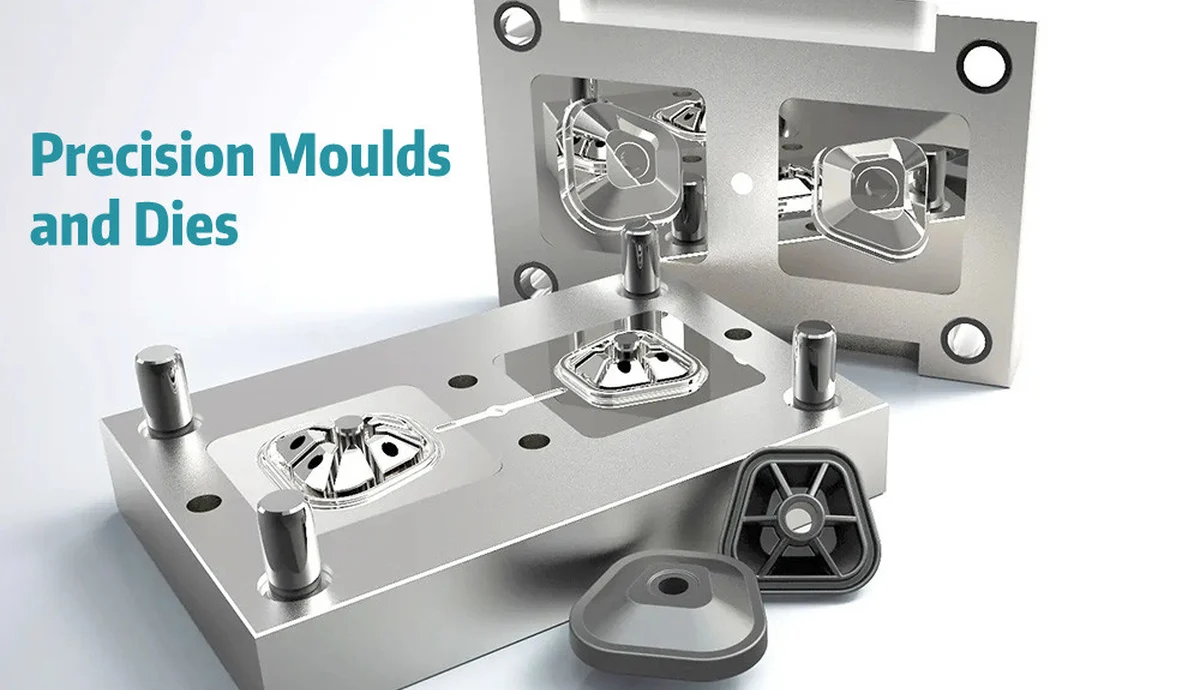
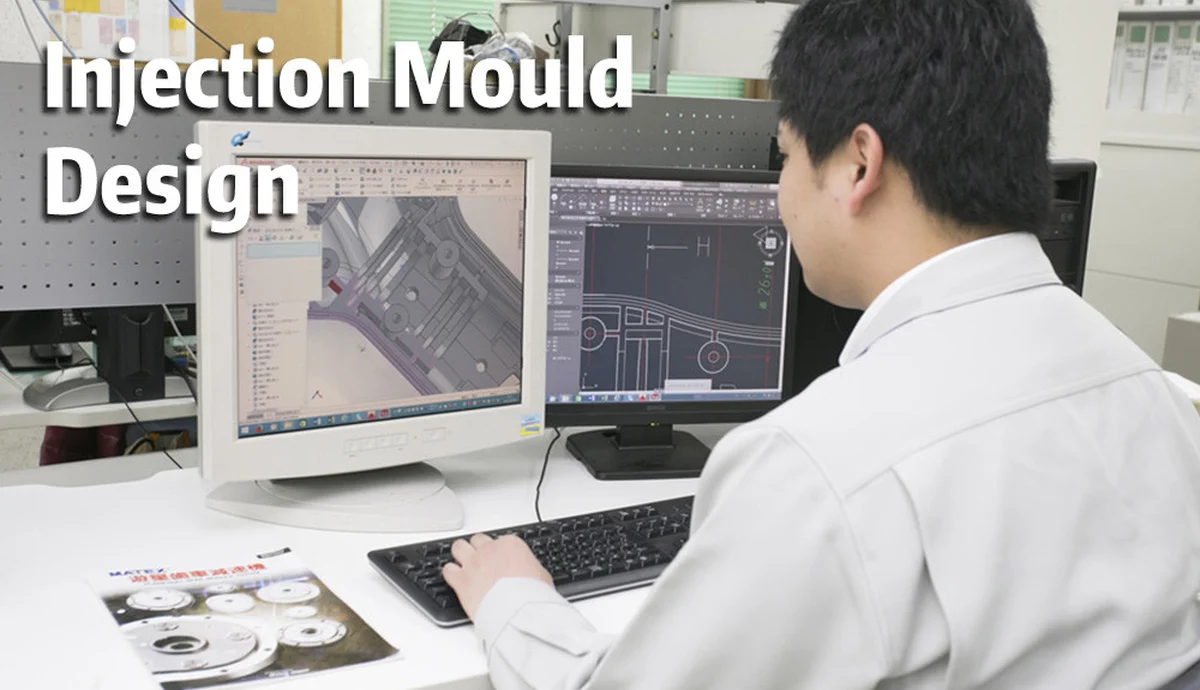
Two parts with similar size can have very different tooling costs if one requires several slides, a hot runner and a high-polish finish while the other opens in a straight pull with a simple cold runner. The fastest way to understand a tooling quote is to ask the supplier to list cavitation, steel, actions, runner type and finish, because these items explain most of the price. Mold design and manufacturing services are described on the injection mould design and injection mould manufacturing pages.
How does mold class and steel choice affect tooling cost?
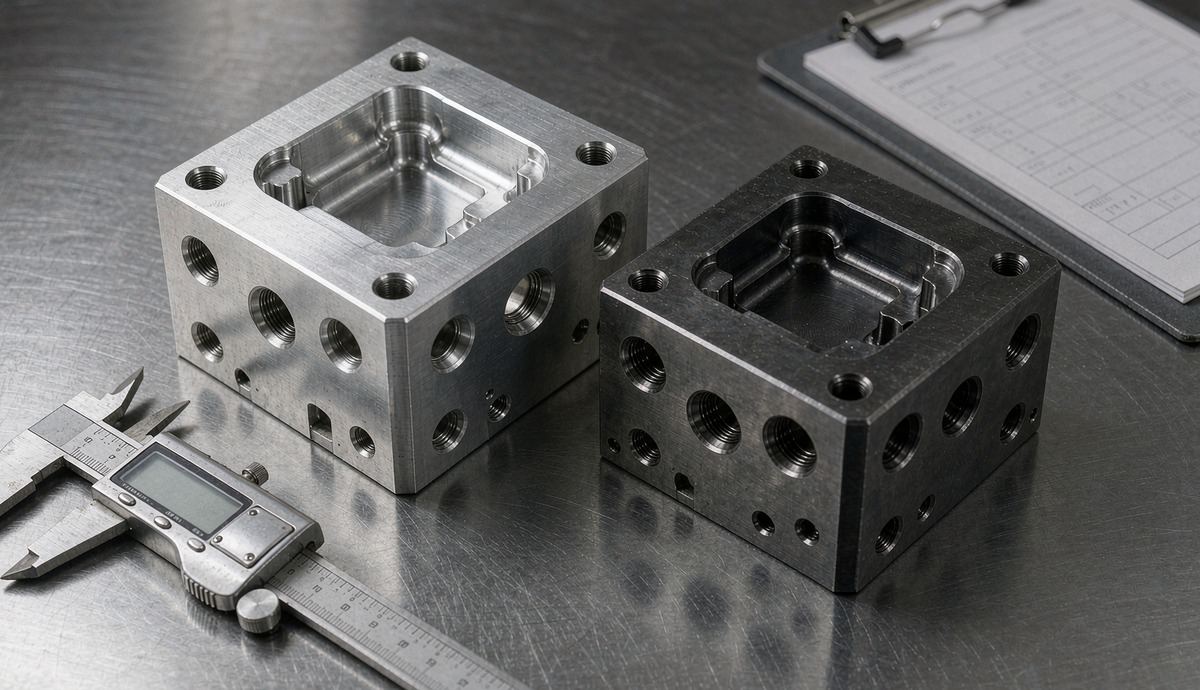
Mold class and steel choice affect tooling cost because they determine how many cycles the mold can produce before major refurbishment. A mold built for a few hundred or a few thousand parts can use aluminum or soft steel with simple construction, while a mold built for hundreds of thousands or millions of cycles needs hardened tool steel, robust guiding, wear plates and efficient cooling. Industry mold classifications describe this range from prototype molds for very limited quantities to high-production molds rated for one million cycles or more.
| Mold type | Typical material | Typical tool life | Relative tooling cost | Best use |
|---|---|---|---|---|
| Prototype / bridge mold | Aluminum or soft steel | Hundreds to tens of thousands of shots | Lowest | Design validation, launch volumes |
| Pre-hardened production mold | Pre-hardened steel such as P20 or equivalent | Hundreds of thousands of shots | Medium | Medium-volume production |
| Hardened production mold | Hardened tool steel such as H13, S136 or equivalent | One million shots or more | Highest | High-volume, abrasive or glass-filled resins |
Choosing a mold class above the real lifetime volume wastes capital, while choosing one below it leads to early wear, flash and dimensional drift. Buyers should state the expected annual volume and the expected product life in years so the toolmaker can propose the right class. The trade-off between bridge and production tooling is discussed in scaling product launches with low volume injection molding.
How do cavities, side actions and hot runners change mold cost?
Cavities, side actions and hot runners change mold cost because each adds steel, machining and assembly work, but each also changes the part price in a different way. Adding cavities raises mold cost roughly in proportion to the number of cavities, but lowers machine time per part because more parts are produced in each cycle. Side actions such as slides and lifters are needed for undercuts, side holes and snap fits; each action adds cost and some maintenance, but removing it usually requires a design change. A hot runner adds a significant upfront cost but removes or reduces runner scrap and can shorten cycle time.
The right combination depends on volume. For a few thousand parts per year, a single-cavity or two-cavity cold-runner mold is usually the most economical. For hundreds of thousands of parts, a multi-cavity hot-runner mold often has the lowest total cost even though the tooling is more expensive. Buyers can ask suppliers to quote two cavitation options, which shows clearly where the break-even point lies. Multi-part tools are explained on the family injection molds page.
How is the injection molding part price calculated?
The injection molding part price is calculated by adding material cost, machine cost, labor cost, secondary operations, inspection and packaging, scrap allowance, overhead and margin. Material cost is the shot weight per part, including the runner share for cold-runner molds, multiplied by the resin price. Machine cost is the press hourly rate multiplied by the cycle time and divided by the number of cavities. Labor depends on whether the press runs with an operator, shared operators or automated part removal.
The formula can be written as: part price = (part weight + runner share) × resin price × (1 + scrap rate) + (press rate per hour × cycle time ÷ 3,600 ÷ cavities) + labor + secondary operations + packaging and inspection, then multiplied by an overhead and margin factor. Press hourly rates scale with machine tonnage, so larger parts on larger presses carry a higher machine cost even at the same cycle time.
What does a worked part price example look like?
A worked example shows how the formula produces a real number. Consider a 40 g ABS housing molded in a four-cavity cold-runner mold, with a 5 g runner share per part, a resin price of 2.50 USD per kg, a 3% scrap allowance, a 30-second cycle on a press costing 40 USD per hour, automated part removal and simple bag packaging. All figures are illustrative and vary with location, resin market and supplier.
| Cost element | Calculation | Cost per part (USD) |
|---|---|---|
| Material | 45 g × 1.03 × 2.50 USD/kg | 0.116 |
| Machine time | 40 USD/h × 30 s ÷ 3,600 ÷ 4 cavities | 0.083 |
| Labor share | Shared operator, automated removal | 0.020 |
| Inspection and packaging | Sampling inspection, bagging | 0.020 |
| Subtotal | 0.239 | |
| Overhead and margin (20%) | 0.239 × 0.20 | 0.048 |
| Part price ex-works | 0.287 |
If the four-cavity mold costs 18,000 USD, amortizing it over 100,000 parts adds 0.18 USD per part, giving a total of about 0.47 USD. Over 500,000 parts, the tooling share drops to 0.036 USD and the total falls to about 0.32 USD. The example also shows the leverage of cycle time: reducing the cycle from 30 to 25 seconds lowers machine cost by about 0.014 USD per part, which equals 7,000 USD over 500,000 parts.
How does production volume change injection molding cost?
Production volume changes injection molding cost by determining how widely the tooling cost is spread and which mold design is economical. At very low volumes, the tooling share can exceed the part price many times over, so prototype molds, 3D printing or urethane casting may be cheaper. As volume grows, injection molding becomes the lowest-cost process, and at high volumes investments in more cavities, hot runners and automation reduce the part price further.
The break-even volume against an alternative process can be estimated by dividing the tooling cost by the difference in part price. For example, if an alternative process costs 4.00 USD per part and molding costs 0.29 USD per part with an 18,000 USD mold, injection molding becomes cheaper after about 4,900 parts. Buyers should run this calculation with lifetime volume rather than the first order quantity, because tooling serves every future order. A comparison of the two operating models is provided in low-volume vs. high-volume plastic injection molding.
How much do material choice and resin price affect part cost?
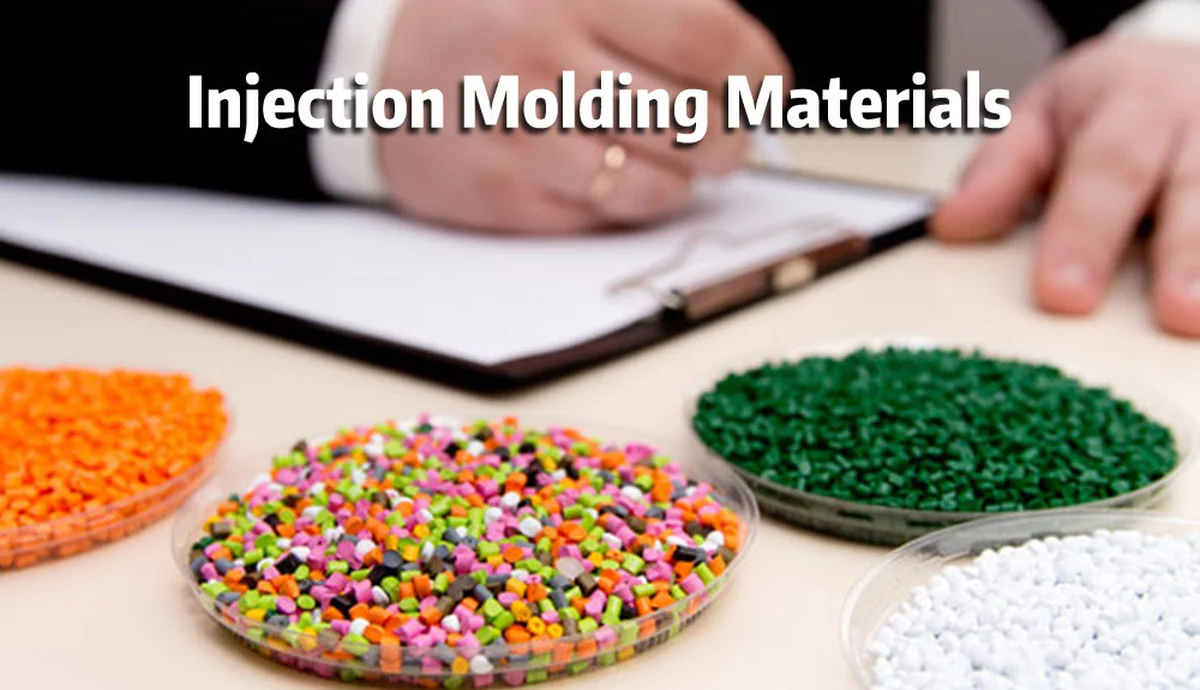
Material choice affects part cost through resin price, density, processing temperature and cycle time. Commodity resins such as polypropylene and polystyrene cost less per kilogram than engineering resins such as polycarbonate, nylon or POM, and high-performance resins such as PEEK cost many times more. Glass-filled and flame-retardant grades increase both resin price and mold wear, which can require hardened steel. A denser resin also raises part weight for the same volume, so price per kilogram alone does not give the full picture.
Resin choice should be driven by function first and cost second, but cost-effective alternatives often exist. Replacing an over-specified engineering resin with a suitable commodity grade, using a color masterbatch instead of pre-colored compound, or reducing wall thickness can lower material cost substantially. Guidance is available in how to select the best resin for your plastic injection part.
Which design decisions have the biggest impact on injection molding cost?
The design decisions with the biggest impact on injection molding cost are wall thickness, undercuts, tolerances, surface finish and part consolidation. Thick walls increase material and extend cooling time, which is usually the longest part of the cycle. Undercuts require slides or lifters that add tooling cost. Tight tolerances on non-functional features increase tooling precision, inspection effort and scrap. High-gloss or textured finishes add polishing or texturing cost and make cosmetic defects more visible.
A design for manufacturability review before the mold is ordered identifies these cost drivers while changes are still cheap. Uniform walls, adequate draft, cored-out thick sections, generous radii and tolerances applied only where needed typically reduce both tooling and part cost. Combining two or three parts into one molded part, or using insert molding or overmolding to remove assembly steps, can also lower total cost. Related processes are described on the insert injection molding and overmolding pages.
Why do injection molding quotes for the same part differ so much?
Injection molding quotes for the same part differ mainly because suppliers make different assumptions about mold class, cavitation, runner type, cycle time, resin source and what is included. One supplier may quote a single-cavity soft-steel mold with a low tooling price and a high part price, while another quotes a four-cavity hardened mold with the opposite profile. One quote may include DFM, mold flow analysis, texturing and T1 samples, while another lists them as extras.
Labor rates, overhead, press utilization and location also matter, but differences in assumptions usually explain more of the gap than differences in efficiency. A very low tooling price can also indicate a lower-grade steel, a smaller mold base, fewer cooling lines or less experienced toolmaking, which shows up later as longer cycles, maintenance or quality problems. Comparing quotes therefore requires aligning assumptions first and prices second.
How should buyers compare injection molding quotes?
Buyers should compare injection molding quotes by placing every quote into the same breakdown and checking each assumption line by line. The comparison table below lists the items every supplier should state.
| Quote item | Why it matters |
|---|---|
| Mold class, steel and guaranteed tool life | Determines durability and future replacement cost |
| Number of cavities and runner type | Drives tooling price, cycle output and material waste |
| Actions, finish and texture | Explains tooling differences and cosmetic quality |
| Estimated cycle time and press size | Determines machine cost per part |
| Resin grade, supplier and part weight | Determines material cost and performance |
| Included engineering and samples | DFM, mold flow, T1/T2 trials, inspection reports |
| Secondary operations and packaging | Assembly, printing, inserts, packaging specification |
| Payment terms, lead time and delivery terms | Cash flow, schedule and landed cost |
| Mold ownership and maintenance terms | Protects the buyer’s investment and future supply |
Once assumptions are aligned, the buyer can calculate total cost over the planned lifetime volume for each supplier, including freight and duties. The supplier with the lowest lifetime total, not the lowest tooling price or the lowest part price alone, is usually the best commercial choice. Total landed cost thinking is explained further in choosing a high volume injection molding company.
What information is needed to get an accurate injection molding quote?
An accurate injection molding quote requires a complete RFQ package that removes the need for the supplier to guess. The package should include:
- 3D CAD files in a neutral format such as STEP, plus 2D drawings with tolerances, critical dimensions and datum references
- Material grade, color and any required certifications such as UL flammability, food contact or medical grade
- Annual volume, order quantity per release and expected product lifetime
- Cosmetic requirements: surface finish or texture, visible surfaces, allowable gate and ejector locations
- Functional requirements: assembly fits, load, temperature and environmental conditions
- Secondary operations: inserts, printing, assembly, ultrasonic welding, packaging
- Quality requirements: inspection reports, first article inspection, capability studies
- Delivery location, delivery terms and target schedule
- Preferred mold class, cavitation or tool life if already decided
Asking each supplier to return the same cost breakdown, including tooling cost, cavitation, cycle time, part weight and part price at two or three volume levels, makes the quotes directly comparable. A practical overview of online quoting is available in how to get a plastic injection molding quote online.
Which hidden costs are often missing from injection molding quotes?
The hidden costs most often missing from injection molding quotes are engineering changes after steel cutting, additional sampling rounds, texture and polishing, secondary operations, special packaging, inspection documentation, freight and duties, and mold maintenance. Engineering changes are the largest avoidable cost, because modifying hardened steel after the mold is built is slow and expensive, and adding steel often requires welding or new inserts.
Other items that appear later include color matching, first article inspection reports, capability studies, certification testing, mold storage fees, and minimum order or setup charges for small releases. A complete quote should state which of these are included and price the rest separately, so the buyer can budget the full project cost from the start.
What ongoing costs should be planned after the mold is approved?
After the mold is approved, buyers should plan for mold maintenance, wear part replacement, engineering changes, resin price changes and eventual mold refurbishment or replacement. Preventive maintenance at defined shot counts keeps parts in tolerance and avoids unplanned downtime; it is usually included in the part price for normal wear, while damage and engineering changes are charged separately. High-volume molds need periodic replacement of wear components such as ejector pins, gate inserts and slide wear plates.
Resin prices move with oil and petrochemical markets, so long-term supply agreements often include a resin price adjustment mechanism. Buyers should also confirm mold ownership, storage and transfer terms in writing, so that the mold can be moved if needed. Repair and refurbishment services are described on the injection mould repair page.
How can buyers reduce injection molding cost without sacrificing quality?
Buyers can reduce injection molding cost without sacrificing quality by improving the design, choosing the right mold class and cavitation for lifetime volume, and reducing cycle time. Design changes such as uniform walls, removing unnecessary undercuts and relaxing non-critical tolerances lower both tooling and part cost. Matching the mold to the real volume avoids overbuilding or underbuilding tooling. Efficient cooling and automation shorten cycle time and labor.
Commercial measures also help: consolidating several part numbers with one supplier, ordering in economical batch sizes, using family molds for related low-volume parts, and agreeing on annual volume forecasts that let the supplier plan press capacity. Cost reductions that compromise steel quality, cooling or inspection usually cost more later through scrap, downtime and field failures.
Frequently asked questions
How much does an injection mold cost?
An injection mold can cost from a few thousand US dollars for a simple single-cavity prototype or bridge mold to tens of thousands of dollars or more for a hardened multi-cavity production mold with slides and a hot runner. Part size, complexity, steel, cavitation and finish determine where a specific mold falls.
What is the minimum order quantity for injection molding?
Injection molding has no fixed minimum, but setup time, material purging and tooling amortization make very small runs expensive per part. Many projects become economical from a few thousand parts, while prototype molds and low volume programs serve smaller quantities.
Why is cycle time so important in part price?
Cycle time determines how many parts a press produces per hour, and machine time is often one of the largest elements of the part price. Reducing cycle time by a few seconds can lower part price noticeably on high-volume programs.
Who owns the injection mold after it is paid for?
In most custom molding projects, the customer who pays for the mold owns it, while the molder stores and maintains it. Ownership, maintenance responsibility and transfer conditions should be written into the purchase agreement.
How long does it take to receive an injection molding quote?
A quote for a well-documented part with complete CAD, drawings, material and volume information can typically be prepared within a few working days. Missing information or design questions extend the quoting time, so a complete RFQ package speeds up the process.
Get an accurate injection molding quote from DJmolding
DJmolding provides custom plastic injection molding from DFM review and mold design through mold manufacturing, sampling, production and secondary operations. Our quotes show tooling cost, mold class, cavitation, cycle time, material and part price clearly, so you can compare options and plan your budget with confidence. We support low volume injection molding and high volume injection molding programs, backed by our quality control system.
Ready to price your part? Send your 3D CAD files, drawings, material, annual volume and target schedule through the DJmolding contact page. Our engineers will review your design, suggest cost-saving improvements and return a detailed quotation with tooling and part price options for different volumes. OEMs, product developers and sourcing agents are welcome to request a quote or a DFM review.
